Mission: AV1
Mission Video
Mission Overview
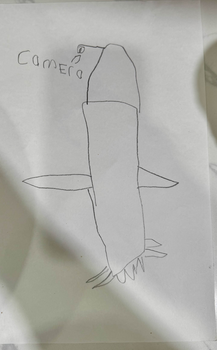
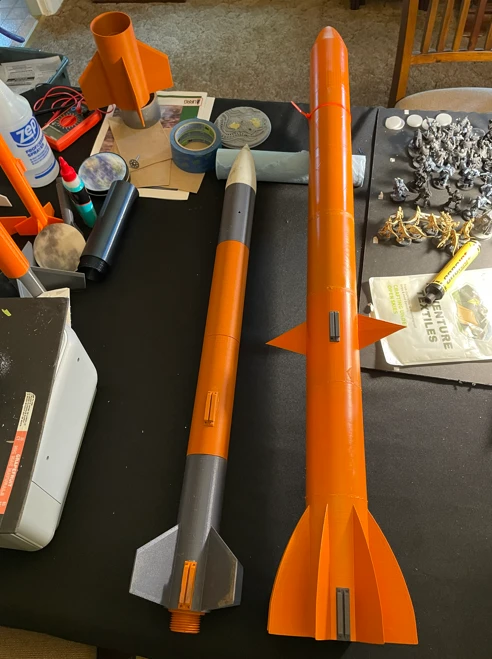
With most of West-Tek's engineering bandwidth going toward the Yankee-II Level 1 certification rocket, the team needed extra design help — so they outsourced it to a seven-year-old. Avi, a family cousin who'd been present since West-Tek's earliest launches, was handed a simple brief: draw a rocket, no constraints. What came back was a rocket with a pair of swept wings mounted mid-body, eight fins clustered at the tail, and "camera" labeled clearly at the nose.
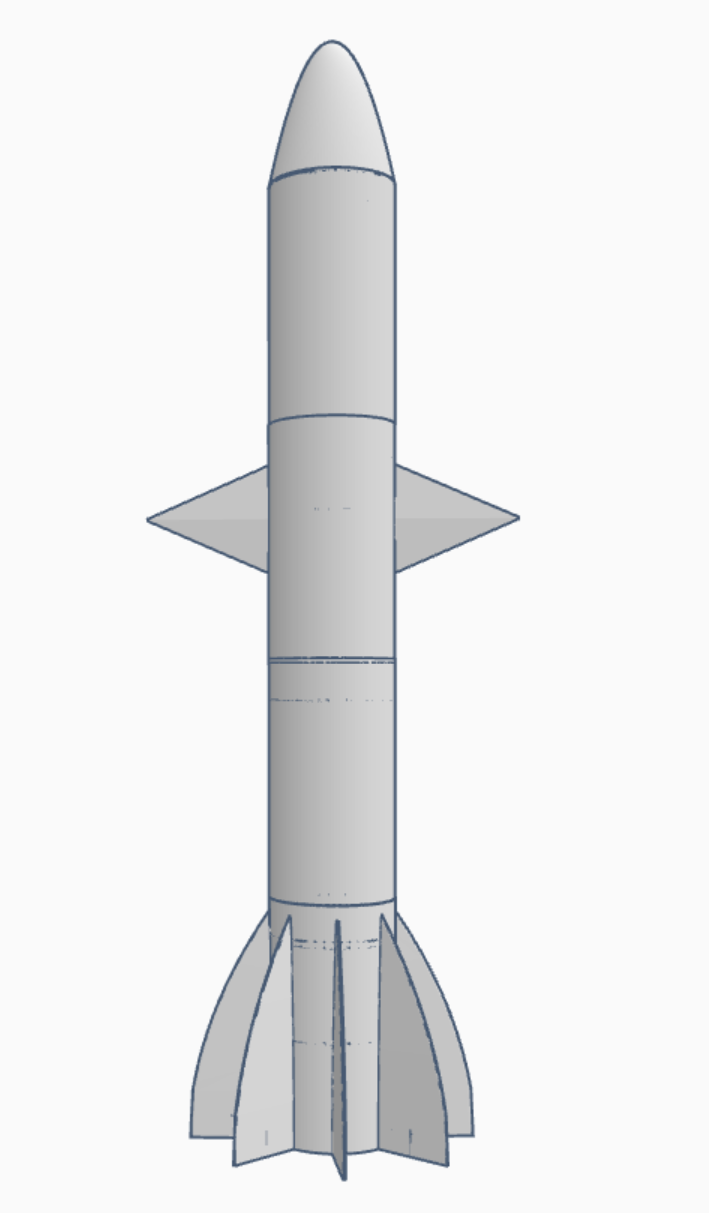
Cousin Hanssen — designing a rocket from scratch for the first time — translated Avi's drawing into CAD: a 3 in diameter airframe on a 29 mm motor mount. For the camera requirement, the team sourced a Mate 808 miniature camera (HD video with audio, under 20 g) and mounted it below the payload bay pointed down at the fin can, using a pre-made rocketry bracket built for that exact camera model.
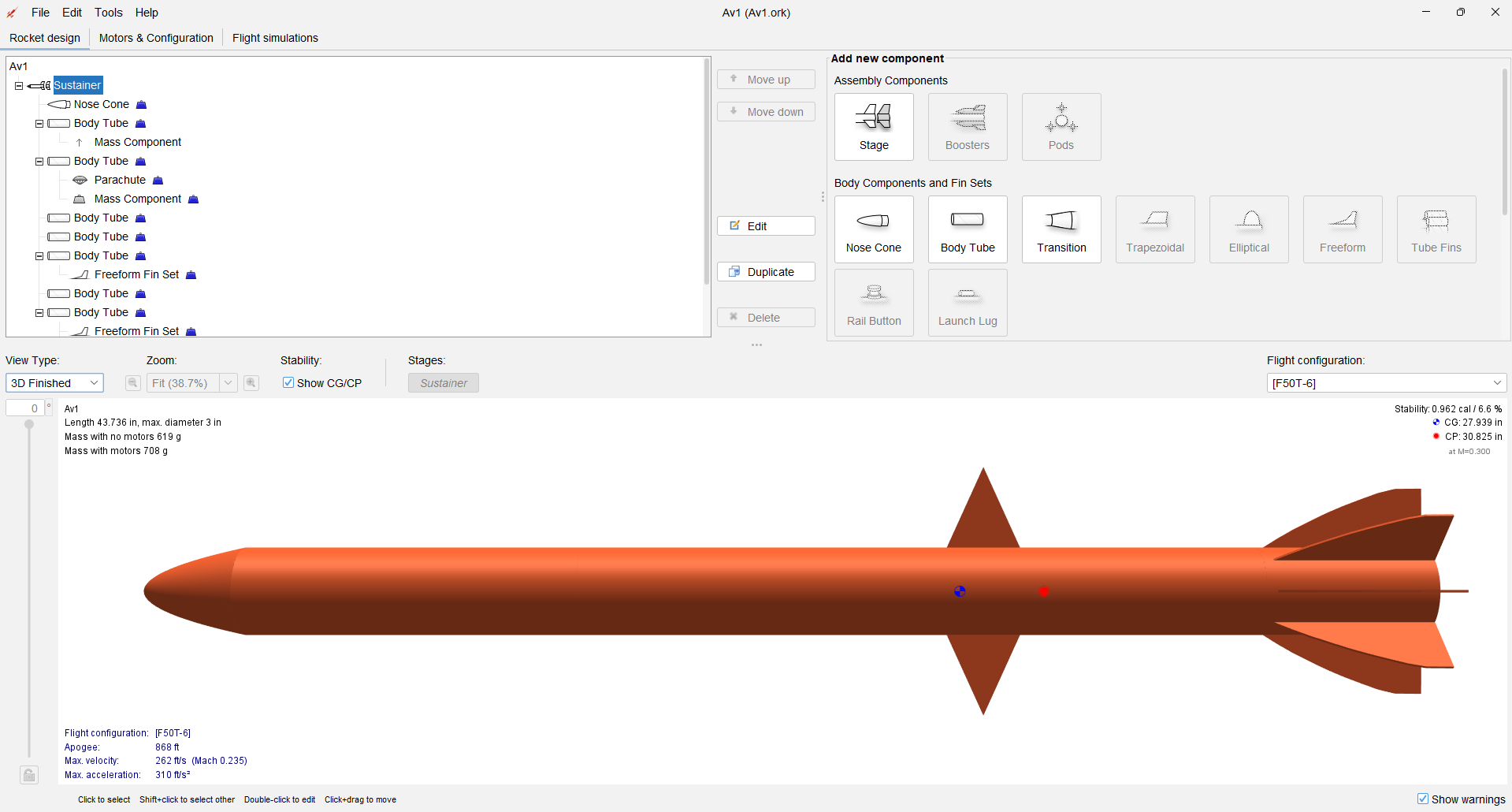
When the design was run through OpenRocket, it came back completely unstable — the extra weight of the eight-fin fin can pulled the center of gravity too close to the center of pressure. Rather than add nose weight, the team stretched the airframe with two extra upper body sections, pushing the CP back and restoring a stability margin of just under 1 caliber on the F50T.
Mission Objectives
Vehicle Architecture
Eight-Fin Fin Can
Avi's drawing showed a jagged fan at the tail that could be read as exhaust flames or a cluster of fins. The team built it as eight discrete fins.
Mid-Body Wing Pair
A pair of swept, wing-like surfaces mounted mid-body, faithful to the original drawing. On a non-gliding rocket, these behave like oversized fins — their contribution to stability depends entirely on their position relative to the center of gravity.
Camera Bay
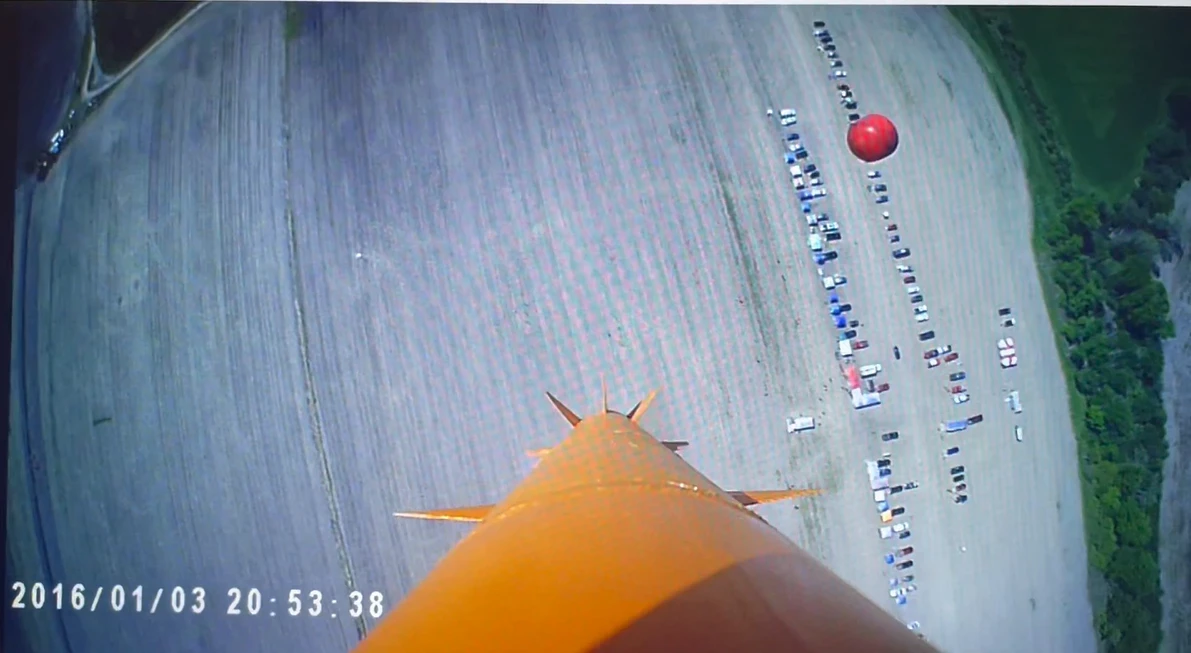
A Mate 808 camera mounted below the payload bay on a pre-made rocketry bracket, angled down toward the fin can for a full-airframe view during flight.
Anomaly Report
While prepping AV1 for launch at MuckFest, the team leaned the rocket against a car and turned away for only a moment. A sudden gust knocked it over, fracturing the airframe clean along the layer lines.
The root cause was straightforward: 1 mm wall thickness proved too thin for this build.
The team glued the fracture, then glued the camera mount directly across the break, turning it into a structural brace, and zip-tied around the joint for extra support. The repaired rocket passed RSO inspection and flew anyway.
Mission Outcome
AV1 flew once at MuckFest 2026, the annual URRG launch event in Potter, New York, on May 16, 2026 — West-Tek's first launch event of this scale. Despite having fractured and been field-repaired less than an hour before flight, it passed RSO inspection and launched off a 1010 rail on its F50T checkout motor.
It wasn't the straightest flight — the camera mount bracing one side of the airframe likely contributed to some wobble — but it flew, reaching a recorded 626 ft before deploying its parachute and landing within sight of the flight line. The upper body picked up additional fractures on the way down, likely from the ejection charge, which scrubbed the planned follow-up G78 flight for the day.
Mission Gallery