Mission: SUPER STRATUS
Mission Video
Mission Overview
After the Yankee One disaster — an underpowered, overweight rocket built in a single weekend that "flopped back to Earth like a wet paper towel" — West-Tek's mid-power track record stood at one success in five flights, and that one success only held together thanks to a stranger's super glue in the Arizona desert. The Super Stratus was the response: a commitment to design the next mid-power rocket the right way, from the ground up.
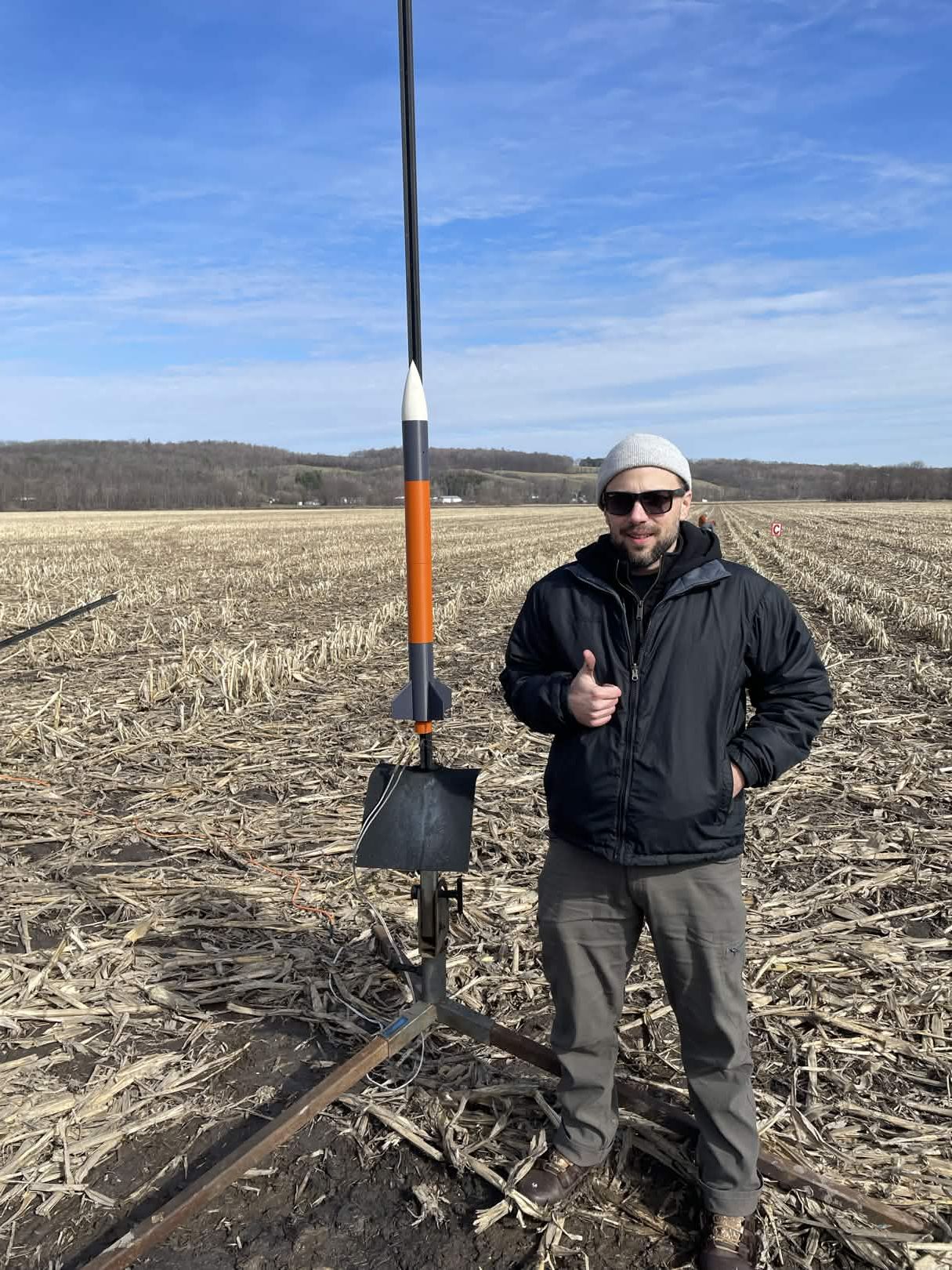
Same DNA as the Stratus, bigger ambitions, and for the first time in West-Tek history, a real engineering workflow. The rocket was designed fully in OpenRocket before any hardware was touched, modeled in Fusion 360 after outgrowing Tinkercad, and printed in PETG carbon-fiber for a stiffer, more dimensionally stable airframe. It was the first West-Tek vehicle to launch off a 1010 rail with positive motor retention, the first built as a fully modular threaded stack, and the first to fly on composite motors instead of Estes black powder.
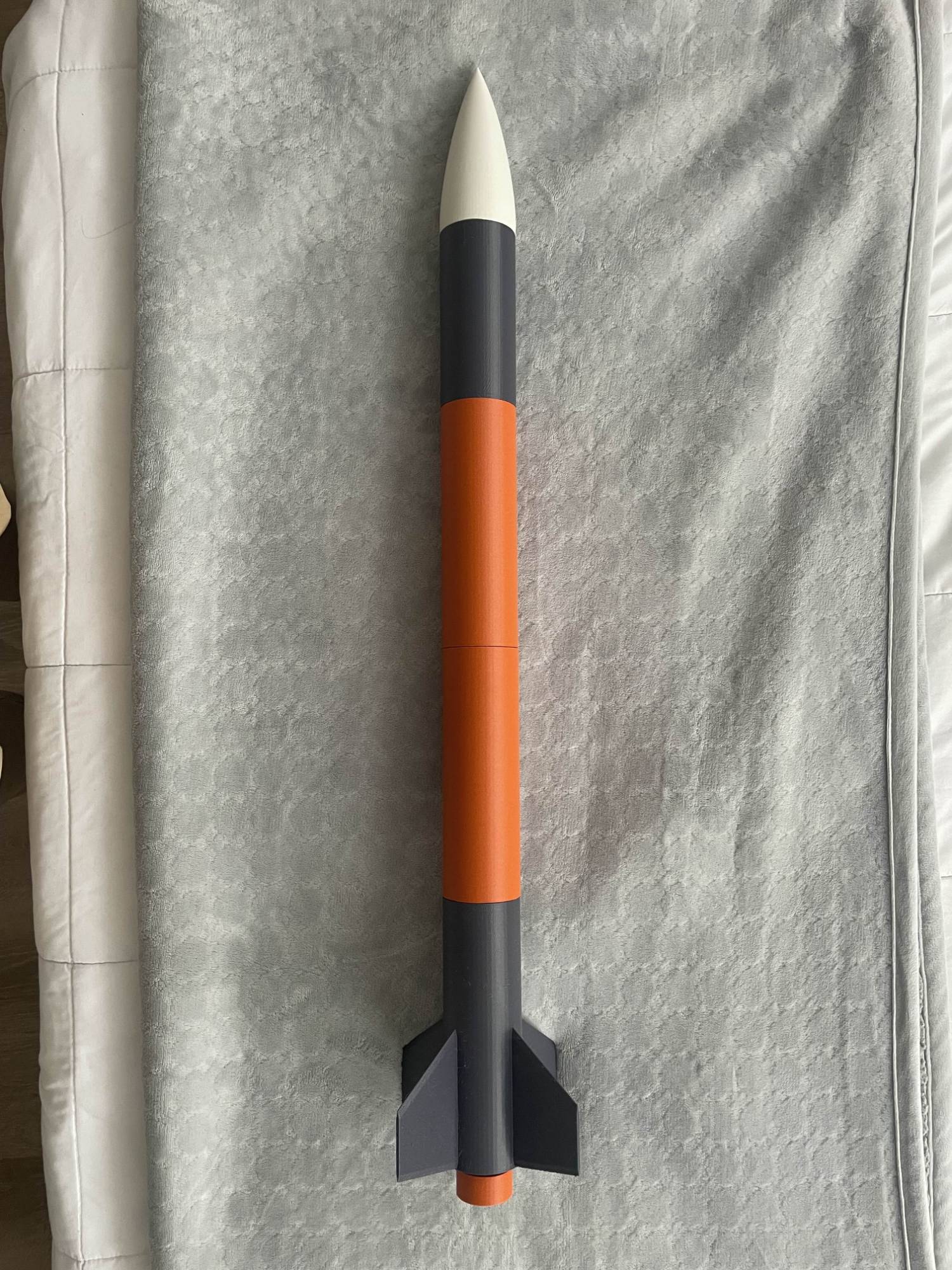
Body diameter landed at 2.56 in — between the Stratus's 1.6 in and the Yankee One's 3 in — paired with a clipped delta fin design borrowing from both. OpenRocket converged on a 32 in tall vehicle projected at around 400 g without a motor; the as-built vehicle came in almost exactly on target.
Mission Objectives
Vehicle Architecture
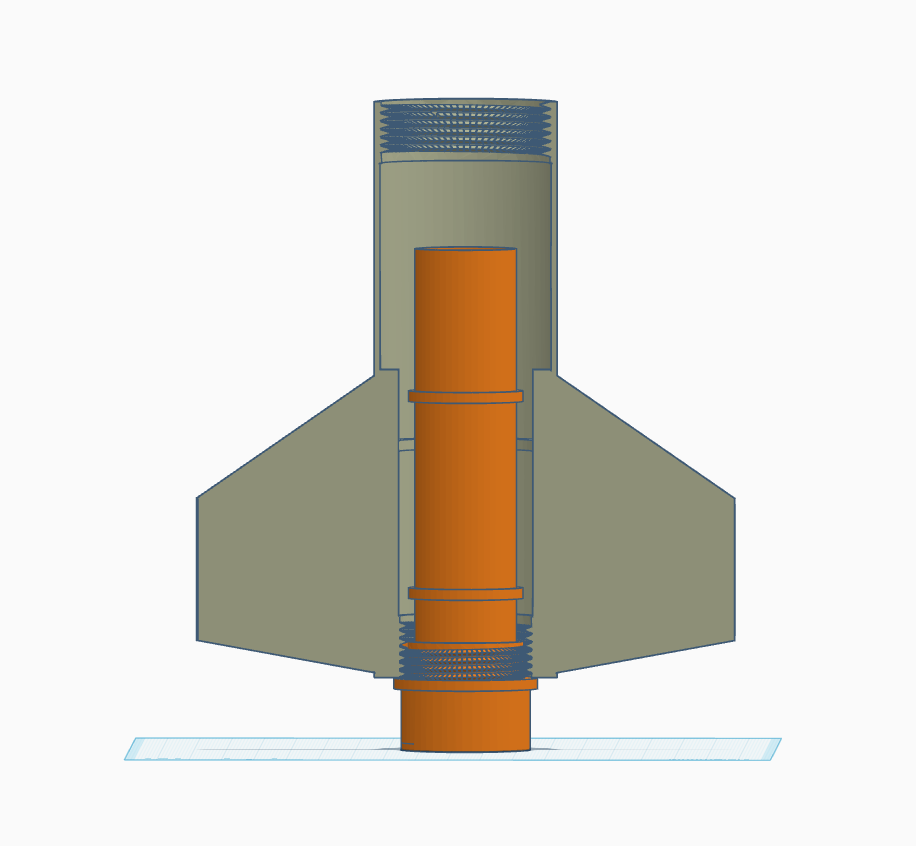
Threaded Fin Can
Clipped delta fins borrowing from both the Stratus and Yankee One designs. Interior threads at the top and bottom let the motor mount thread in from below and the lower body stack on top.
Modular Threaded Airframe
Every section — lower body, upper body, payload bay, and nose cone — threads together in one continuous stack, so any section can be removed, swapped, or reprinted without touching the rest of the rocket.
Positive Motor Retention
The first West-Tek vehicle designed with dedicated motor retention hardware rather than a friction fit, eliminating any risk of the motor shifting under thrust.
Anomaly Report
The first flight — a checkout of the airframe, recovery system, and new rail setup on an F50T motor — left the rail cleanly and deployed its parachute as planned. On recovery, the team found the airframe had separated at the threaded joint between the lower body and the fin can, snapped clean at the thread.
The working theory: the interior threads created a small lip inside the body tube. When the ejection charge fired, that lip caught the blast, and on this flight it was enough force to break the weakest point in the airframe.
Since this vehicle was already slated for retirement after this test program, the team lined up the separated sections, soaked the joint in Gorilla Glue, clamped it together, and let it cure in the field — well enough to fly one more time on the G78.
Mission Outcome
The Super Stratus flew twice in one day at URRG in Potter, New York on March 29, 2026. The checkout flight on the F50T confirmed the airframe, recovery system, and rail setup — and also exposed the threaded-joint failure documented above.
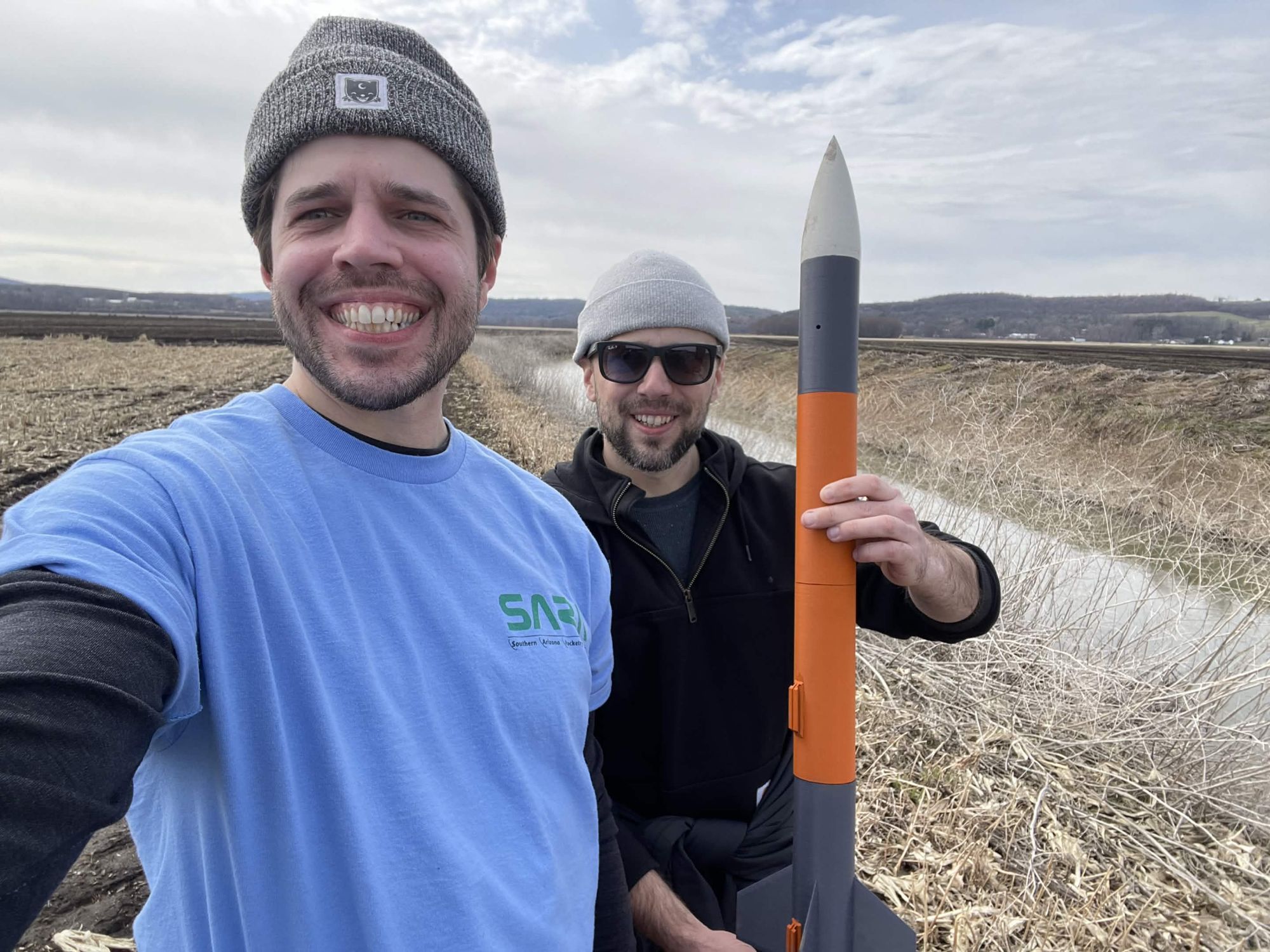
After the field repair, the same airframe flew a second time on a G78 — the most powerful motor West-Tek had flown to date. It left the rail faster, louder, and if anything straighter than the first attempt, reaching an estimated 2,400 ft before deploying its 18 in parachute. The rocket drifted far off the field and required an extended recovery effort, including a river crossing, before it was found in perfect condition.
Mission Gallery